How Companies Can Reduce Employee Transportation Costs
Deepak Chandra | Published Date 30-Oct-2026
Discover how companies can reduce employee transportation costs by 20% to 35% with route optimization, right-sized fleets, centralized billing, and EV cabs.
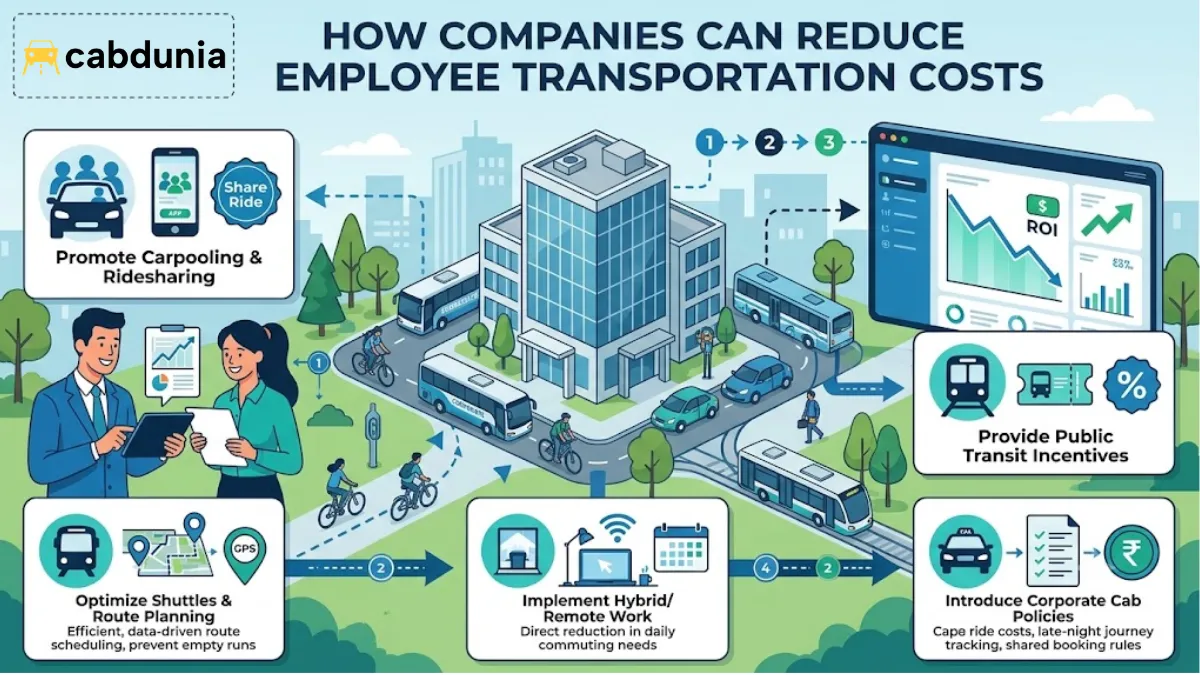 How Companies Can Reduce Employee Transportation Costs | How Companies Can Reduce Employee Transportation Costs
Employee transportation is one of the ongoing costs for companies today. This includes businesses like call centers, technology offices and factories. Every day people travel to work some leave late at night others move between places and executives also need to travel. When these transportation needs are not handled well they take a hit on the money the company has. Poor routes, trips and not keeping track of fuel costs can make the transportation bills go up by 20% to 35%.
If companies move from not having a plan for transportation to having a clear strategy on how companies can reduce employee transportation costs, they can save a lot of money. This also helps make sure employees get to work and, on time through structured corporate employee transportation services.
Taxi Service in Delhi
View AllHow Companies Can Reduce Employee Transportation Costs Highlights
Shift from Reimbursements to Centralized Corporate Cab Services
When employees are allowed to hail on-demand cabs or claim private fuel reimbursements a lot of administrative overhead appears and billing leakage is invited. On-demand apps apply surge pricing during peak morning and evening rush hours, which causes unpredictable daily costs for employees.
Partnering with a corporate mobility partner like Cabdunia gives employees a contract that offers predictable, per-kilometer or monthly fixed billing through centralized corporate cab services. Centralized invoicing removes thousands of reimbursement claims saving finance teams valuable processing hours and standardizing travel budgets to effectively reduce corporate travel expenses.
Implement Smart Route Optimization and Ride Pooling
Single-occupancy cab commutes are the reason why transport costs continue to go up. Utilizing smart route optimization and ride pooling via automated transport management platforms use routing algorithms to connect employees who live along the same transit corridors into shared cabs or vehicles that can carry more people.
- Corridor Clustering: When team members are grouped based on areas they live in the number of passengers in each car goes up. The average number of passengers in a sedan or SUV increases from 1.2 to, than 3.5.
- Dynamic Routing: Real-time route optimization helps reduce the distance traveled. It avoids traffic jams, Greatly lowers the number of empty miles driven between pickup stops and drives massive employee commute cost optimization.
Deploy Right-Sized Fleet Configurations
One common mistake when buying vehicles is using the vehicle types for every shift. Matching fleet capacity to the rider density can cut trip costs directly under professional corporate cab fleet management.
- High‑Density Corridors: Replace single sedans with 12‑ to 26‑seater Tempo Travellers or electric mini‑buses on the main trunk routes during shift changeovers.
- Low‑Density or Odd‑Hour Shifts: Use hatchbacks or compact sedans, for scattered late‑night doorstep drops ensuring female safety compliance and avoiding half‑empty large vehicles.
Transition to Electric Vehicles (EVs)
Fuel makes up forty to fifty percent of the operating costs for commercial fleets. Bringing vehicles into everyday employee transport plans can save a lot of money through phased corporate ev fleet adoption.
- Electric vehicles give lower running costs for each kilometre than cars that use petrol, diesel or even compressed natural gas. We see vehicles as the best choice for keeping costs down.
- Leasing vehicles for a long time protects companies from sudden rises in global fuel prices and also helps them meet their environmental, social and governance goals for cutting carbon. Electric vehicles are a move, for our future.
Enforce Strict Digital Attendance and No-Show Policies
Empty seats cost money. When an employee takes leave or chooses personal transport without canceling their scheduled cab seat companies still pay for the vehicle dispatch.
Implement employee rosters where staff must confirm or decline their pickup, at least two hours before the scheduled dispatch.
Automated driving apps use OTP or QR check-ins to confirm that passengers are boarding. This means that companies only pay for trips that they actually take and not for routes that were only planned but never used so companies pay for real trips not for unused routes.
Key Cost-Reduction Strategies at a Glance
| Strategy | Operational Focus | Estimated Cost Savings |
|---|---|---|
| Centralized Fleet Contracts | Replaces individual ride hailing & surge fares | 15% – 25% |
| Route Clustering & Pooling | Maximizes seat occupancy per trip | 20% – 30% |
| Right-Sized Vehicles | Uses Tempo Travellers/buses on dense routes | 15% – 20% |
| EV Fleet Integration | Lowers per-km fuel & maintenance expenses | 25% – 35% on fuel tariffs |
| Roster & No-Show Tracking | Prevents dead trips and unutilized dispatches | 5% – 10% |
Learning how companies can reduce employee transportation costs is not, about sacrificing comfort or safety. It’s about doing things. By bringing operations using the right number of vehicles and choosing efficient shared mobility routes companies can reduce employee transportation costs and still provide dependable commutes for their employees. It’s about balance.

Get the List of Top Taxi Services
We’ll send you contact details in seconds for free
What Type of Taxi Services Do You Need?
Latest Posts
View AllHow Companies Can Reduce Employee Transportation Costs FAQs
Rosters with OTP or QR check-ins confirm passenger boarding making sure companies only pay for completed rides and not for empty dispatches due, to unnotified no-shows.


 Use Current Location